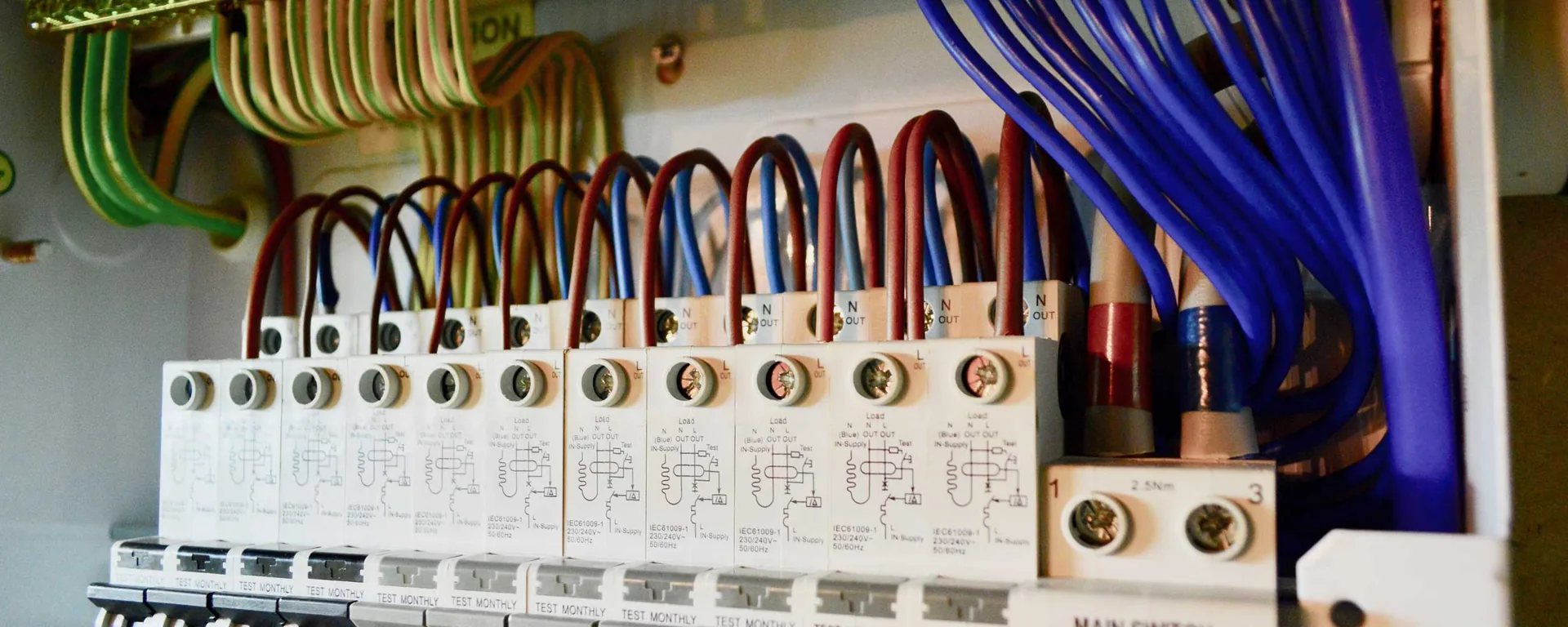

If you let a property in Scotland, the EICR is one of the four pieces of paperwork that has to be current at all times. Get any of it wrong and the lease is not legally compliant, the letting agent will not market it, and the insurer can argue the cover. The rules are clear, but they are not always explained clearly. Here is the short version.
Scotland's 5-year landlord rule
Since 1 December 2015, every private rented property in Scotland has been legally required to have an EICR (Electrical Installation Condition Report) carried out by a qualified electrician at least every five years. The same rule requires a PAT report on portable appliances supplied with the let, and smoke and heat detectors interlinked to current standards. The EICR is the big one because it covers the whole fixed installation.
The five-year clock runs from the date the certificate was issued, not the date the property was let. If your last EICR was issued in May 2021, the next one is due no later than May 2026. A new tenancy starting before that date does not reset the clock, but most letting agents will ask for a fresh report at any tenancy change anyway, because it covers them on the inventory and the inventory check-in.
C1, C2, C3, what each finding means
Every observation on an EICR gets one of four codes. Understanding what each one means is the difference between a report you panic about and a report you act on calmly.
- C1 (Danger present). Immediate risk of injury. Exposed live conductors, damaged consumer unit cover, no earth where there should be one. C1 makes the report unsatisfactory and must be made safe straight away (often on the day of the inspection).
- C2 (Potentially dangerous). Not immediately dangerous, but likely to become so. A loose terminal, missing supplementary bonding in a bathroom, an undersized earth on the main bonding. C2 also makes the report unsatisfactory and needs remedial work before the report can be re-issued.
- C3 (Improvement recommended). Not dangerous, not against current regs at the time of installation, but improvable. An older RCD that still passes its tests but predates current types, a consumer unit in plastic, no surge protection. A report with only C3 findings is still satisfactory.
- FI (Further investigation required). The inspector saw something that needs more digging before it can be classified. Often used when a circuit cannot be safely tested without lifting floorboards or taking apart equipment.
An EICR with one or more C1 or C2 findings comes back as "Unsatisfactory". An EICR with only C3 and no C1, C2 or FI comes back as "Satisfactory". That is the line landlords actually care about.
What an EICR actually tests
An EICR is not just a visual walk-through. It is a documented test of the fixed electrical installation. On a typical visit we carry out:
- Earth loop impedance. Confirms the earth path back to the supply is intact and low enough for the protective device to clear a fault in time.
- Insulation resistance. Tests the insulation between live conductors and earth across every circuit, picks up cable damage and degraded insulation.
- Polarity. Confirms live and neutral have not been swapped anywhere along the run.
- RCD operation. Tests trip time and trip current on every RCD, confirms it does what it is supposed to do at the values it is supposed to do it at.
- Visual inspection. Consumer unit condition, accessory condition (sockets, switches), earth bonding to gas and water, cable management, signs of overheating or damage.
You get the full report, every test value documented, every observation photographed where useful. That is what your letting agent or insurer will ask for if anything ever needs to be referred back.
EICR due on your Edinburgh rental?
Book in a NAPIT-registered EICR with Spartan Electrical. Fixed price quoted up front based on the property, certificate issued the same day.
Get a Free QuoteHow long the visit takes and what it costs
A typical domestic EICR takes 2 to 4 hours on site for a one to three-bedroom property. Larger properties, HMOs, or properties with more than one consumer unit take longer. Commercial premises depend entirely on the size of the installation and the number of circuits.
Pricing starts from £180 for a small one or two-bedroom flat. A three-bed terraced or semi-detached house typically lands somewhere in the £220 to £280 range. Anything larger, an HMO, or commercial work is priced after a quick look at the consumer unit and circuit count. We quote in writing before booking so there are no surprises.
For landlords with portfolios, we can schedule batches of EICRs back to back across the same area to keep the unit price down. Edinburgh, East Lothian, West Lothian, the Borders, Livingston and Glasgow are all on our patch.
What to do if your report comes back unsatisfactory
First, do not panic. An unsatisfactory report does not mean the property is uninhabitable. It means there are one or more items that need fixing before the certificate can be re-issued as satisfactory.
Step one is to read the report properly. Every C1 and C2 will be described in plain English, with the location and the recommended remedial. Step two is to get those remedials priced. If we carried out the EICR, we will quote the remedials there and then where we can, and we can often complete minor remedials on the same visit (replace a tired socket, tighten a terminal, fit a missing blanking plate). That turns the report straight to "Satisfactory" without a return visit.
Bigger items, a board upgrade, supplementary bonding works, a circuit recode, are quoted separately and scheduled when it suits the tenancy. Once the remedials are signed off, we re-issue the EICR as satisfactory and lodge it with NAPIT. The letting agent or insurer then has the paperwork they need.
If you have an EICR coming up in the next few months, get it booked while you have the time to plan around any remedials. Leaving it to the week the certificate expires is usually how a £180 visit turns into a stressful week.
Frequently Asked Questions
Every five years at minimum. The clock runs from the date the certificate was issued, not from when the tenancy started. Most letting agents will also ask for a fresh report at every change of tenancy.
C2 is potentially dangerous and must be fixed before the report can be issued as satisfactory. C3 is an improvement recommendation, not against the regs at the time of install, and the report can still be satisfactory with only C3 findings.
Yes, where it makes sense. Tightening a loose terminal, replacing a damaged accessory or fitting a missing blanking plate can usually be done there and then. We quote the bigger items separately so you can decide.
From £180 for a one or two-bedroom flat. A three-bed house is typically £220 to £280. Larger properties, HMOs and commercial premises are priced after a quick look at the board and circuit count. Every price is fixed in writing before booking.